
Best Weekend Getaways for Women: Easy Solo Travel Trips That Feel Like a Real Reset

There is a specific kind of tired that a weekend at home cannot fix.
You know the one. The kids are cared for, the house is semi-managed, the inbox is checked: and still you wake up Monday morning feeling like you never actually stopped. Like you moved through the weekend refereeing and restocking and responding, and somewhere in there, you forgot to exist as a person.
Quick Take: A weekend at home often doesn’t fix the kind of exhaustion that comes from constantly being needed. This article explores solo travel as a reset—not an escape—and highlights restorative destinations in the U.S. and abroad that help you slow down, reconnect with yourself, and return feeling grounded instead of depleted.
Because that kind of tired needs a different kind of medicine.
It needs a door that closes. A morning that belongs only to you. A coffee that you drink at whatever pace your body actually wants to drink coffee. A city, or a mountain, or a coast.. somewhere that isn't the place where everyone needs something from you.
I took myself to Paris alone for my birthday in January (and paid less than $12 round trip to do it). I walked into Notre Dame mid-mass without planning to, stood in a cathedral that was built on top of an ancient goddess temple, and watched a priest swing sage smoke around the altar. I thought: I traveled all the way here to remember that magic is everywhere, even in the places that tried to erase it.
I came home different. Not because of what I did. Because of how I moved: slowly, alone, with intention.
That is what a solo trip can do. And you do not have to go to Paris for it to work.

First: What Makes a Solo Trip Actually Restorative
Before we get into destinations, let's talk about what we're actually solving for. Because a solo trip that's packed too tightly, or chosen without intention, can leave you just as depleted as if you'd stayed home.
I wrote about this at length in Travel as a Reset, Not an Escape, but the short version is this: most of us were taught to travel like we work. Efficiently. Productively. With a full itinerary and a sense of accomplishment at the end.
That approach is an escape, not a reset. And escape is temporary by definition.
A reset asks a different question before you even book anything: How do I want to feel when I come home? Not what do I want to see. Not what do I want to do. How do I want to feel on the other side of this?
That feeling is the actual destination. The city is just where it happens.
What Is Intentional Travel? (And Why It Changes Everything)
Intentional travel means you have a reason for the trip that goes deeper than "I need a break." It means you've thought about what you're bringing into the experience: a question you're sitting with, a part of yourself you want to come back to, a clarity you're looking for.
The word intentional gets thrown around a lot. The intentional meaning behind it, in the context of travel, is simple: you are not moving through the trip on autopilot. You are present for it. You are letting it do something to you.
The power of intention shows up in small ways. It's choosing the slower walk instead of the rideshare. It's sitting at the café for an extra hour because something in you needs the stillness. It's paying attention to what lands in your body in a new place : what relaxes, what opens, what quietly shifts.
Abundance energy — the feeling of having enough time, enough space, enough self — is nearly impossible to access when you're in the middle of your regular life. A solo trip, even a short one, creates the conditions for an abundant mindset. That's not woo. That's just what happens when you remove yourself from the constant demand cycle, even temporarily.
A Note on Astrocartography
Some of you reading this already work with astrology in your travel decisions, and I want to name that here because it can make an impactful difference in your trip.
Astrocartography is the practice of overlaying your birth chart onto a world map to identify places where different planetary energies are most active for you. Your Astrocartography chart shows you, literally, the lines where you are most likely to feel alive, creative, lucky, in love, seen, or at home: and the places where things might feel harder.
If you've never pulled an Astrocartography chart, it's worth doing before planning your next solo trip, especially if you're traveling for healing or clarity. A birth chart reading from someone who specializes in locational astrology can tell you which cities and regions activate your most expansive energies: and which ones might drain you without you knowing why.
This is the kind of travel planning that most people skip. It's also the kind that, once you try it, you wonder how you ever booked a trip without it.
The Best Solo Trip Destinations for Women — Domestic and International
These aren't ranked. They're organized by what kind of reset you actually need.

If You Need Silence and Nature: Scottsdale and Sedona, Arizona
I have traveled solo to Scottsdale several times, and every time I stay at the Camelback Inn I remember why I keep going back. It sits at the base of Camelback Mountain, surrounded by desert and quiet, and it has a spa that does something to your nervous system within about twenty minutes of arrival.
The pools are beautiful. The grounds are beautiful. You walk out of your room in the morning and the light on the desert is doing something you cannot fully describe to anyone who hasn't seen it.
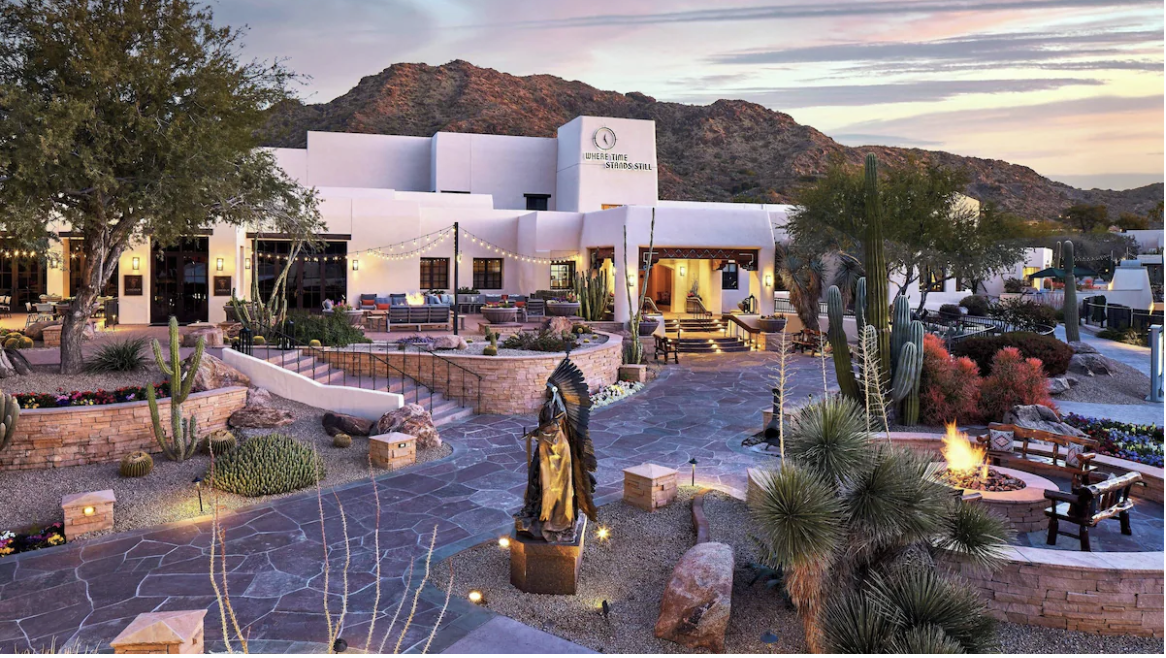
Scottsdale is an easy solo trip in the best possible way. The resort does most of the work. Old Town has excellent restaurants and galleries. You can rent a bike, book a desert hike, or do absolutely nothing: all of it feels intentional rather than lazy.
About two hours north, Sedona is a completely different experience and worth the drive.
The red rock formations there stop you mid-sentence. Sedona sits on what are called vortex sites: places where the earth's energy is said to be concentrated and active. Whether or not that resonates with you, most people feel something in Sedona. The landscape itself demands your attention in a way that quiets the noise.
The town has exceptional restaurants, incredible spa options, more crystal shops than you can visit in a long weekend, sound healing experiences, cacao ceremonies, intuitive readings, and sunrise hikes that will make your whole body remember what it feels like to be a person. For women who are drawn to energy work, astrology, and ritual — this is one of the most potent domestic destinations you can choose.
Solo travel tip: Rent a Jeep for a day in Sedona and drive the back roads. You cannot fully experience that landscape from a regular car.
Points angle: Fly into Phoenix (PHX) — one of the most point-accessible airports in the Southwest — and rent a car. Scottsdale is 30 minutes from the airport. Sedona is about two hours north. Both are worth your time.

If You Need Culture and Beauty: Savannah, Georgia
Savannah is one of those cities that does something to you before you've even done anything in particular. The Spanish moss. The squares. The way the light moves through the trees in the late afternoon.
It is an extraordinarily easy city to be alone in. The pace is slow. The architecture is gorgeous. You can spend an entire day walking with no agenda and feel like you did something real. The food is exceptional. The energy is old and layered and interesting.
For a woman traveling solo who wants to feel beautiful and at ease — not conspicuous, not unsafe, not like she needs to be on guard — Savannah delivers. It's the kind of city where sitting alone at a good restaurant with a book feels like exactly the right thing to do.
Savannah has both Hilton and Marriott properties downtown. If you're holding Amex Gold points, this is a natural domestic hotel redemption.
cuous, not unsafe, not like she needs to be on guard — Savannah delivers. It's the kind of city where sitting alone at a good restaurant with a book feels like exactly the right thing to do.
Savannah has both Hilton and Marriott properties downtown. If you're holding Amex Gold points, this is a natural domestic hotel redemption.

The Doubletree by Hilton has free breakfast, is incredibly aesthetic, and a 2 queen room starts at just $139 a night. Not only does it have a swimming pool for the kids and full breakfast available, but it's also nestled into the Savannah Historic District, a 2 minute walk from the City Market, a 7 min walk from the SCAD Museum of Art, and 10 minutes from River Street. CLICK HERE to learn more about this hotel.
If You Need Coast and Quiet: Cannon Beach, Oregon
The Oregon coast has a particular kind of beauty that doesn't show off. It's moody and dramatic and honest in a way that the southern California coast isn't. Cannon Beach specifically — with Haystack Rock rising out of the water, the tide pools, the long stretch of grey-sand beach — is the kind of place that asks nothing of you except to show up and pay attention.
In the off-season especially, it's quiet in a way that actually penetrates. Rent a small cottage, bring books you've been meaning to read, walk the beach in the morning before anyone else is out. There are good restaurants, local wine, and a small artsy downtown that takes about forty-five minutes to explore and is better for it.
Solo travel tip: Cell service is intentionally limited in parts of the coast. Let that be part of the point.
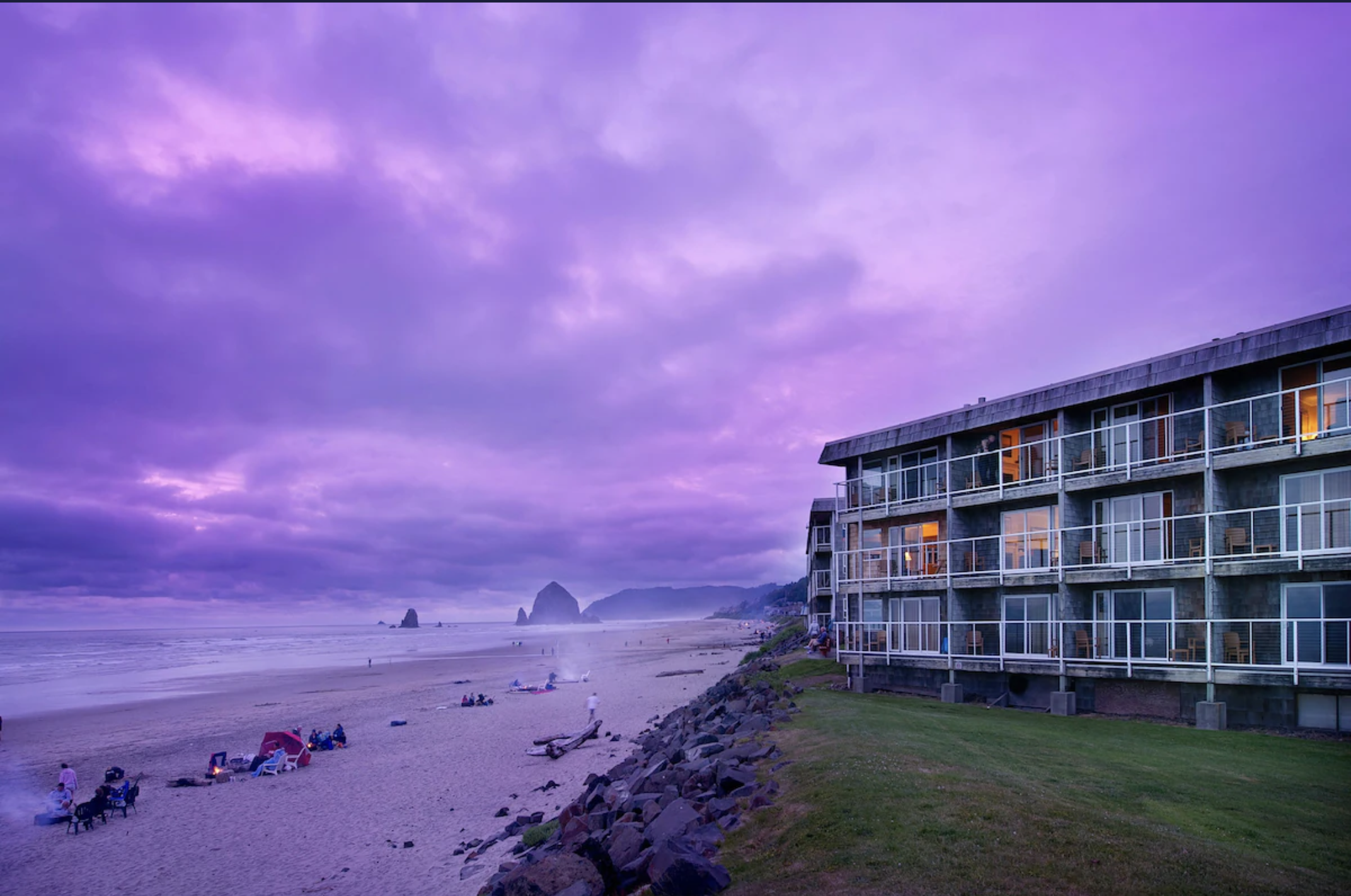
While I haven't yet, I would love to stay at the Tolovana Inn, a cute little Inn with direct beach access and views of Haystack Rock. Rooms start at just $139 a night and include breakfast. CLICK HERE to learn more about this Inn.
If You Want to Feel Brave: International Solo Travel (And Why the Fear May Be Misplaced)
I want to talk about something that doesn't get said enough in conversations about solo female travel: the United States is not actually the safe baseline we assume it to be.
The Global Peace Index ranks countries on conflict, societal safety, and militarization — and the U.S. currently sits around #132 out of 163 countries. That means over 130 countries are measurably more peaceful than staying home. The Women, Peace and Security Index, which specifically evaluates how safe women feel — in their homes, on the street, walking alone at night — consistently places countries like Iceland, Portugal, Ireland, the Netherlands, Denmark, Finland, and New Zealand at the very top of its rankings.
These are not obscure destinations. These are the cities that come up over and over in conversations with Her Travel Club members about where they dream of going.
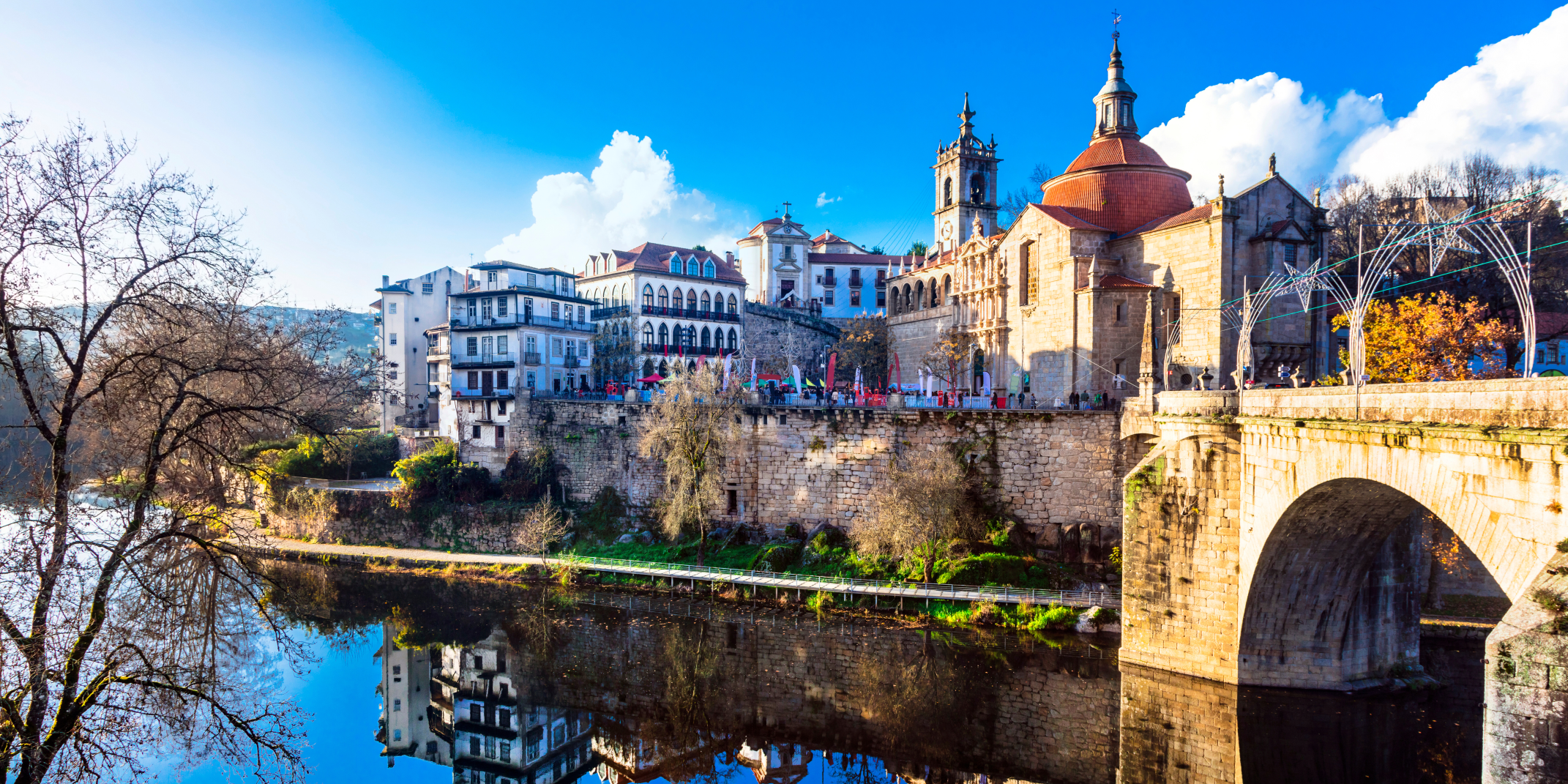
Ireland, where approximately 78% of women report feeling safe walking alone at night. Portugal, which has climbed to 7th safest in the world and where I am actively planning to relocate my family in 2027. Iceland, where the Global Peace Index score has made it the world's most peaceful country for over a decade. The Netherlands, where I flew my entire family of six last year.
This matters for solo travel specifically because one of the most exhausting things about traveling somewhere you're not sure is safe is the vigilance. The low-grade scanning. The constant management of uncertainty under the surface of an entire trip. That vigilance is depleting in a way most women don't name directly — they just come home tired in a specific way and aren't quite sure why.
When you travel somewhere that is genuinely safe — where the data backs up what your body feels — you can actually put that vigilance down. And the experience of moving through a city at night without bracing, without calculating, without managing your visibility — that is its own form of restoration. I've felt it walking through Lisbon at midnight. I've felt it in Amsterdam on a Tuesday afternoon. I have not consistently felt it in American cities. In fact, I have a whole YouTube video about it, and an article.
The fear of international travel is often more intense than the actual risk of it. And that's worth sitting with before you decide another year will pass before you go.
Getting to Europe on Points: It's More Accessible Than You Think
Here's the part I want you to hear if Europe has been sitting on your list as a "someday" destination.
Reward flights to Amsterdam, London, and Paris can be shockingly low: we're talking 15,000 points for a direct flight from the western U.S. I've booked those exact routes for my own family. I paid $5.90 in taxes and fees for my solo Paris trip. The flights themselves were covered by credit card points earned through groceries and everyday spending.
The tool I use to find these deals is Seats.aero: it lets you search award availability across multiple airlines simultaneously instead of logging into six separate portals one at a time. You can filter by minimum seats, sort by fewest points, and search in rolling 60-day windows to find the best availability across a full year.
I walked through the entire process in detail — live, in real time — in both a YouTube video and a full article. If you want to see exactly how I search for flights to Europe on points, including the connecting city strategy that can get you from London to Paris for as little as 4,000 additional points, that's the place to start: How to Plan a Full Year of Reward Travel and Find the Best Deals Using Seats.aero.
A solo long weekend in Amsterdam. A few days in Paris for your birthday. A week in Lisbon walking alone at night feeling completely safe. These are not fantasies reserved for people with bigger budgets than yours. They are the exact trips that reward points were made for.
Luxury Solo Travel Doesn't Mean Expensive
One of the beliefs I want to gently dismantle: that solo travel is a luxury you have to save up for.
It doesn't have to be.
A solo weekend in Sedona on points is a completely different financial reality than paying cash. A solo night in a beautiful hotel in the city nearest to you, covered by Amex hotel points, costs you almost nothing out of pocket. Even one night away — alone, in a room that is yours, with a morning that belongs only to you — is worth doing.

The Reward Travel Starter System was built exactly for this. It shows you how to turn your everyday spending into points that cover flights and hotels — including solo trips that feel luxurious without the price tag to match.
If you want to understand whether a specific redemption is actually a good deal, use the Reward Calculator before you book. It takes about thirty seconds and tells you clearly whether you're getting excellent value or leaving points on the table.
Practical Solo Travel Tips for Women
Because logistics matter, even when we're trying to be intentional about the bigger picture.
Book yourself a real room. Not the cheapest option. Not the one that's technically fine. Something that feels like a treat. You are not splitting this cost with anyone. You do not have to negotiate it with anyone. Give yourself a room that makes you feel like you made a good decision the moment you walk in.
Tell someone your itinerary. This is the one piece of safety advice that costs nothing and matters. A trusted person at home should know where you're staying and your general plans. This is not fear-based — it's just basic, smart solo travel practice.
Don't over-schedule. Leave at least one full morning or afternoon completely open. Unscheduled time is not the same as wasted time. It's where the best parts of a solo trip happen — the unexpected walk, the bookstore you didn't plan to enter, the conversation that changes something.
Eat at the bar. Especially if dining alone feels uncomfortable at first. The bar at a good restaurant is where the best conversations happen, the service is faster, and no one looks at you like you're waiting for someone.
Build in a buffer on the return. Don't fly home Sunday night if you're back to full life on Monday morning. Even one slow morning at home before re-entry makes a meaningful difference in how the trip actually lands in your body.
I have a whole safety guide around this and if you want to download it, you can find it HERE.
What to Ask Yourself Before You Book
Three questions that have changed how I plan every trip — solo or otherwise. (I wrote about these in depth in Travel as a Reset, Not an Escape, but they're worth naming here too.)
How do I want to feel when I come home? Not what do I want to see or do. How do I want to feel on the other side of this?
What does this trip need to NOT be? If you're going for rest, it needs to not be packed. Being clear about what to protect gives you permission to actually protect it.
What am I hoping the trip will solve: and is that realistic? Travel can create the space to start difficult work. It cannot do the work for you. Go knowing what you're bringing and what you're hoping for.
You Deserve This
I'll say what I think some of you need to hear: you do not need to earn a solo trip.
You don't need to wait until the kids are older, or the business is more stable, or things calm down (they won't), or someone gives you permission. The version of you who comes home from even one night away alone — rested, clear, more herself — is a better mother, a better partner, a better everything.
That's not selfish. That's strategy.
If you're brand new to traveling on points and want to understand how to make these trips financially accessible, start with the free Reward Travel Guide. It breaks the whole system down simply, in language that makes sense, without requiring you to become someone who thinks about credit cards all day.
And when you're ready to plan the actual trip — the logistics, the budget, the packing — the Family Trip Printable Packing List works just as well for solo travel. I use it every time.
Go somewhere. Even somewhere close. Even somewhere small. Go alone and let it do something to you.
That's the whole point.
Affiliate disclosure: This post contains affiliate links. As a FORA-affiliated travel advisor (IATA #33520476), I may earn a commission on travel bookings at no extra cost to you. All opinions are my own.
Ready to fund your next solo trip on points? Download the free Reward Travel Guide and see exactly how it works.
You might also love: